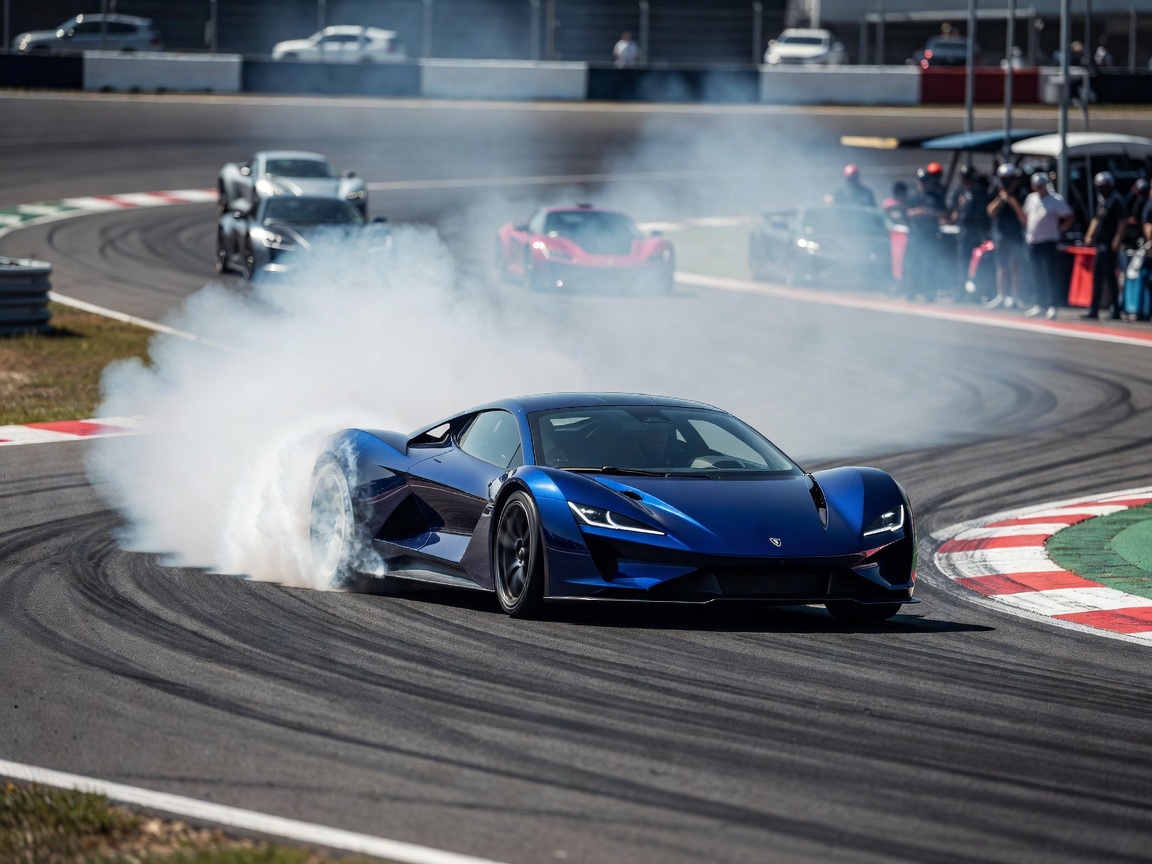
Speed and Handling
How the latest crop of EVs is decimating internal combustion on the tarmac.
The New Era of Performance
For decades, automotive performance was defined by displacement, forced induction, and gear ratios. The electric vehicle (EV) revolution has completely flipped this script. Today's high-performance electric cars don't just rival traditional sports cars; in many metrics, they absolutely destroy them.
The secret lies in the fundamental physics of electric motors compared to internal combustion engines (ICE). An ICE must spool up, build RPMs, and shift gears to stay within its optimal power band. An electric motor delivers its maximum torque at 0 RPM. When you press the accelerator in a performance EV, the power delivery is instantaneous, aggressive, and seamless.
Torque Vectoring: The Handling Hack
Straight-line speed is impressive, but true gearheads care about cornering. EVs handle weight differently. Yes, the massive lithium-ion battery packs make these cars undeniably heavy—often cresting 4,500 lbs. However, because that weight is packed into a flat "skateboard" chassis at the absolute lowest point of the vehicle, the center of gravity is superior to almost any front-engine ICE vehicle.
Furthermore, dual-motor and tri-motor setups enable authentic, independent torque vectoring. Traditional differentials use brakes to manage wheel spin around corners. Multi-motor EVs can dynamically send positive torque to the outside wheel while applying regenerative braking to the inside wheel, pivoting the heavy chassis around apexes with logic-defying agility.
Model Showdown: The Performance Kings
| Model Classification | 0-60 MPH | Top Speed | Drivetrain | Peak HP |
|---|---|---|---|---|
| Luxury Hyper-Sedan | 1.99s | 200 mph | Tri-Motor AWD | 1,020 hp |
| German Super-Tourer | 2.70s | 161 mph | Dual-Motor AWD | 750 hp |
| American Track Sedan | 2.20s | 205 mph | Tri-Motor AWD | 1,234 hp |
| Performance Crossover | 3.10s | 155 mph | Dual-Motor AWD | 576 hp |
These figures aren't just parlor tricks for YouTube drag races. The active suspension systems—often air-ride configurations combined with adaptive dampers—allow these vehicles to transition from comfortable highway cruisers to track-stiff corner carvers at the push of a touchscreen icon.
Braking: Regenerative vs Friction
Stopping a 5,000-pound missile is no small feat. While massive carbon-ceramic friction brakes remain an option on top-tier trims, the real hero is regenerative braking. By reversing the electric motor to act as a generator, EVs can achieve incredibly rapid deceleration without ever touching the brake pads, drastically reducing fade during track days. Mastery of "one-pedal driving" on a canyon road is a distinctly rewarding new skill for modern drivers.