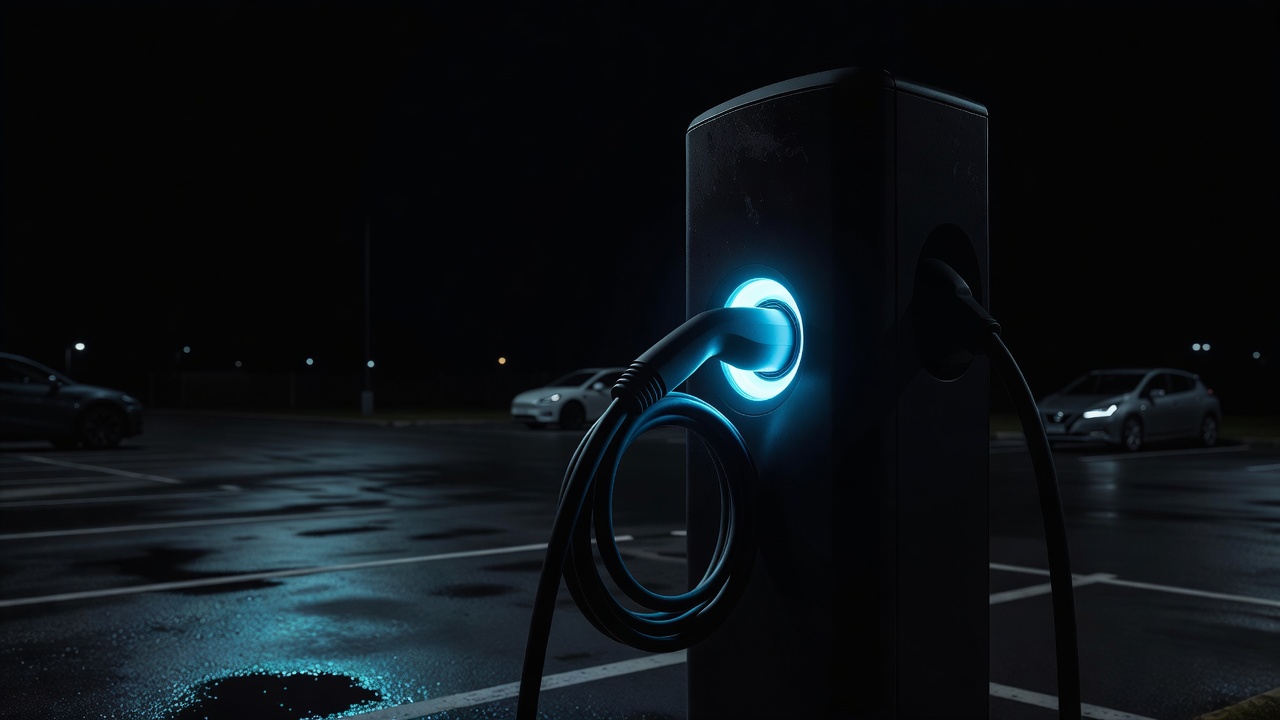
Range Anxiety Busted
Charging at home, the truth about DC fast charging, and the lifespan of lithium-ion.
The Anatomy of an EV Battery Pack
When we talk about an electric car's "engine," we are actually talking about the battery pack. These monolithic units dominate the chassis of the vehicle, running from the front axle to the rear. But a battery pack isn't just one giant battery—it is composed of thousands of individual cylindrical or prismatic cells, organized into modules, heavily monitored by a Battery Management System (BMS), and kept at optimal temperatures by active liquid thermal management systems.
Currently, the industry standard is the Lithium-Ion (Li-ion) chemistry, usually leveraging Nickel Manganese Cobalt (NMC) or Lithium Iron Phosphate (LFP). LFP batteries are becoming increasingly popular for standard-range vehicles because they are cheaper, avoid ethically controversial metals like cobalt, and can be routinely charged to 100% without degrading the cell chemistry.
Charging at Home: The Game Changer
The single biggest paradigm shift when moving from gasoline to electric is changing how you "fuel" up. The gas station model is dead for daily driving. Instead, you charge your car the same way you charge your smartphone—by plugging it in while you sleep.
- Level 1 (120V): Plugs into a standard wall outlet. Yields about 3 to 5 miles of range per hour. Barely sufficient for heavy commuters, but fine for hybrids.
- Level 2 (240V): The gold standard for home setups. Yields 20 to 40 miles of range per hour. You can charge a fully depleted 80kWh battery overnight easily.
DC Fast Charging on the Road
For road trips, you rely on Level 3 DC Fast Charging. These commercial stations pump direct current straight into the battery, bypassing the car's onboard converter. Historically, 400-volt architectures maxed out around 150kW. Today, high-end EVs utilize 800-volt architectures, allowing them to pull over 350kW from advanced chargers.
At these speeds, a vehicle can charge from 10% to 80% in roughly 18 minutes. The reason charging curves drop off drastically after 80% is to protect the battery cells from extreme heat and lithium plating. As a smart gearhead, the strategy on a road trip isn't to charge to 100%; it's to "splash and dash"—charge to 80% quickly, and drive to the next fast charger.
Battery Degradation: Fact vs Fiction
A common myth is that an EV battery will need replacing every five years for $20,000. Data from hundreds of thousands of EVs on the road proves otherwise. Modern liquid-cooled battery packs show average degradation of just 10% to 15% after 200,000 miles. Furthermore, federal mandates in many regions require manufacturers to warranty the high-voltage battery for at least 8 years or 100,000 miles.
To preserve your battery's health, keep daily charges between 20% and 80%, rely mostly on AC Level 2 charging, and reserve DC Fast Charging for long trips. Do that, and the battery will likely outlast the chassis of the car.